Net zero water is a practical next step for how we plan and build in Colorado Springs and our surrounding high-altitude resort communities. As a local architecture firm, we view net zero water as part of responsible mountain urbanism that protects our headwaters while supporting tourism, housing, and long-term economic resilience.
What Net Zero Water Means in Colorado Springs
For our team, a net zero water community is one where total water use over the course of a year is balanced by local supply, reuse, and recharge within the same watershed. This does not always mean being fully off grid or disconnected from city utilities; it means sharply reducing imported demand, reusing water more than once and returning clean water to local ecological systems. In the Front Range and the high country, this is directly tied to the health of our snowpack, our aquifers and the Colorado River system downstream. For developers, landowners and resort operators in and around Colorado Springs, net zero water is increasingly about risk management, stabilizing operating costs, protecting entitlements and demonstrating climate responsibility to guests and residents.
Net zero water architecture in high altitude resort towns
From an architectural standpoint, we begin with ruthless efficiency. We design residential and mixed-use buildings that cut baseline water demand through high-efficiency fixtures, carefully modeled occupancy patterns, and landscape strategies that favor native or xeric planting with subsurface irrigation. In resort settings, occupancy is highly seasonal, so we calibrate fixture counts, distribution, and storage to peak holiday loads while driving down everyday use with smart controls and real-time metering.
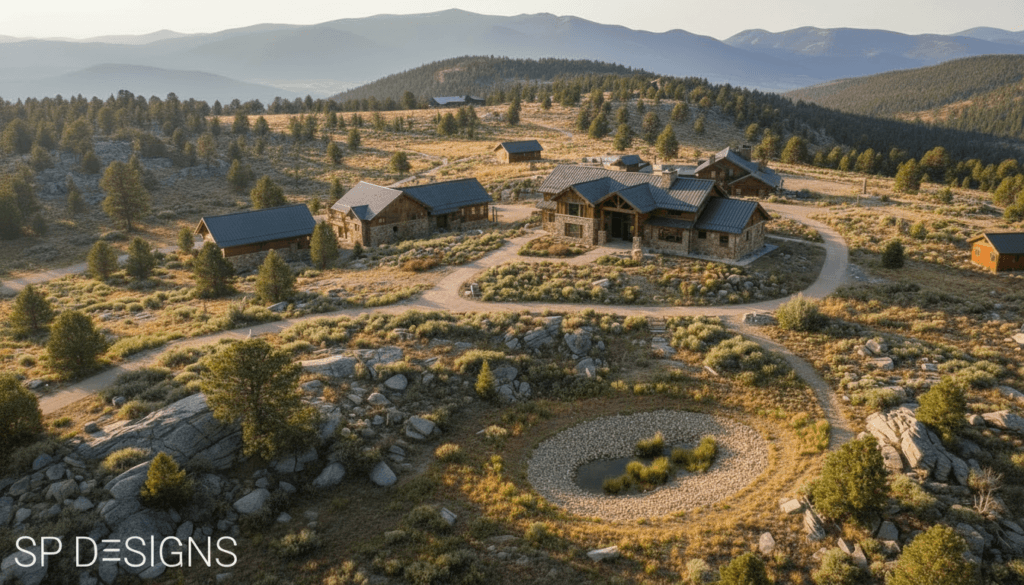
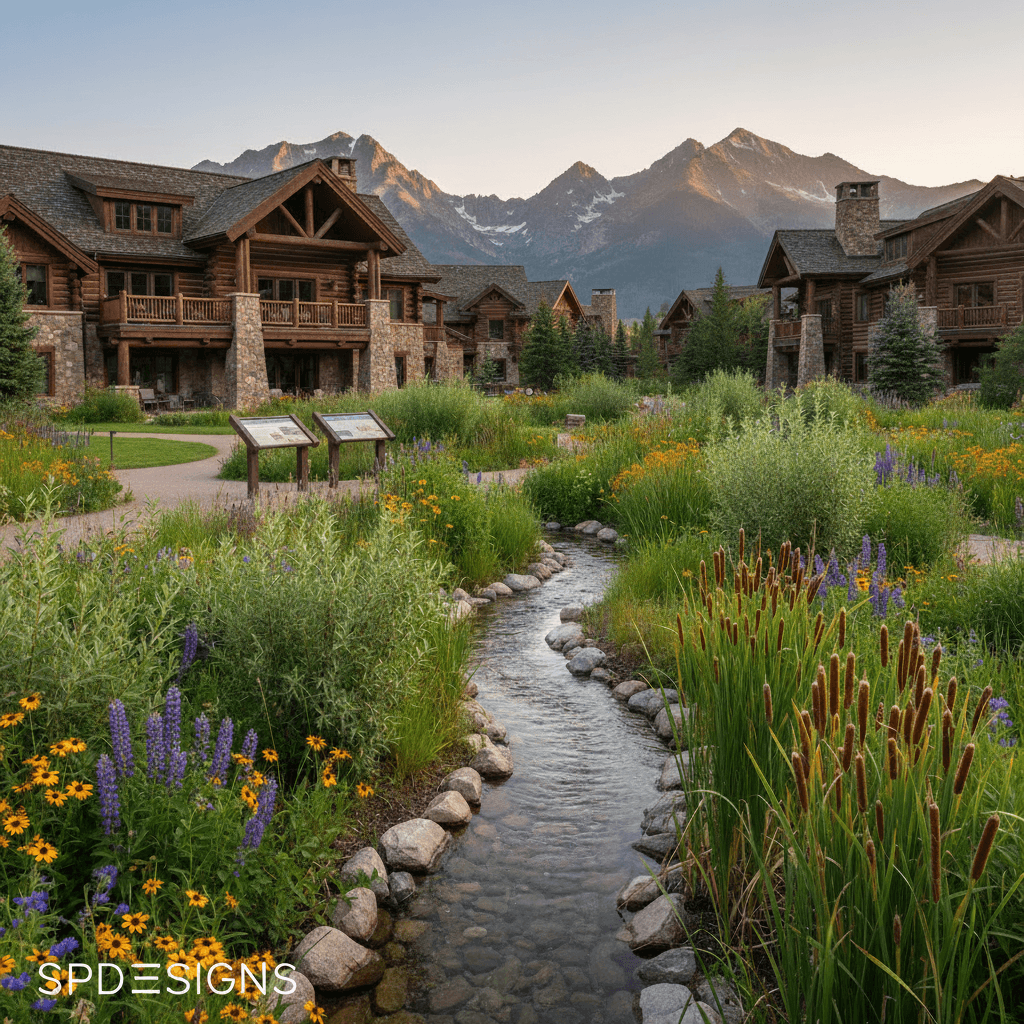
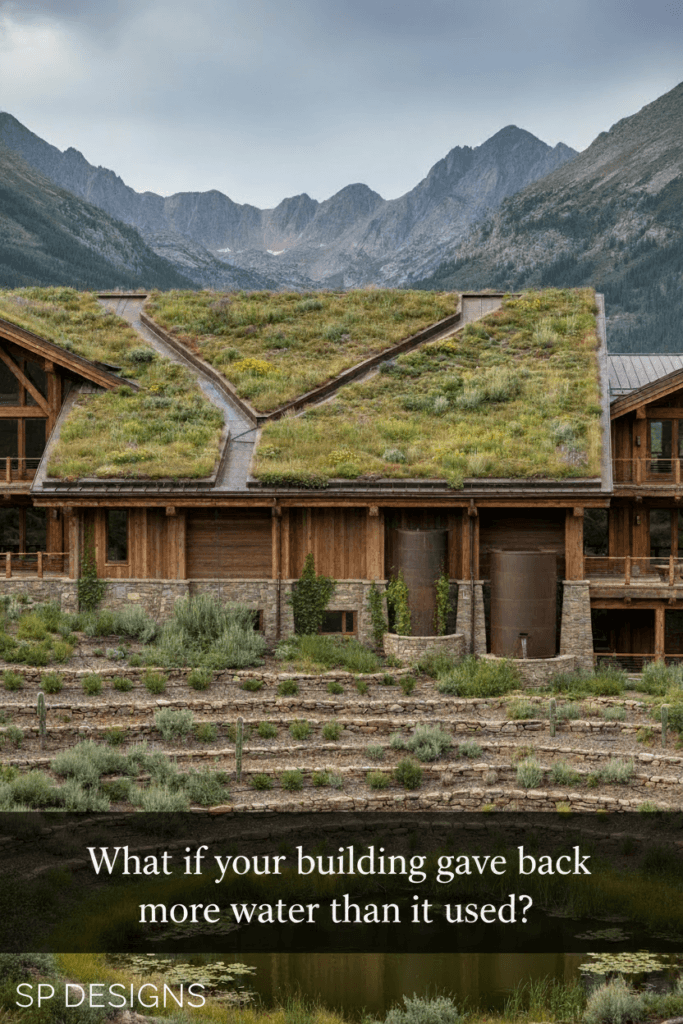
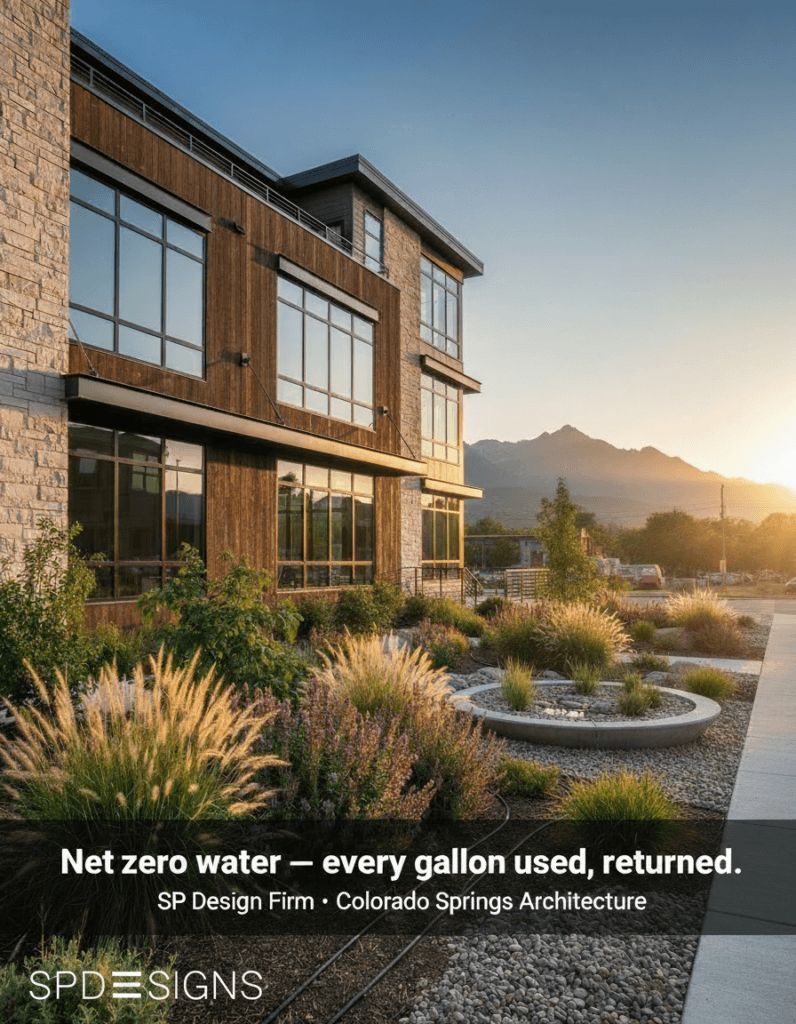
The next layer is water reuse. We treat greywater from showers and lavatories as a primary resource for irrigation and, where regulations allow, toilet flushing and other nonpotable uses. At the community scale, we plan shared systems across lodges, multifamily clusters, and workforce housing so that treatment and storage can be centralized within a walkable district rather than duplicated on every parcel. Architecturally, this means sitting mechanical and treatment zones strategically and integrating them with accessible landscape, including constructed wetlands, snowmelt-fed channels, bioretention gardens, and green roofs that support both performance and placemaking.
High altitude conditions add another set of design constraints that we treat as generative. Snowmelt becomes a designed water supply rather than just a drainage problem; roof geometry, valley lines, collection basins, and surface grading work together to harvest and slow meltwater before it reaches the storm system. Because of freeze-thaw cycles, we bury or insulate cisterns, control pipe routing to avoid frost depth, and design for shoulder-season transitions as systems are brought on and offline. Steep slopes and thin mountain soils require careful grading, terracing, and reinforced bioretention areas so that infiltration is safe, stable, and visually quiet in the landscape.
Why net zero water matters for Colorado Springs clients
Colorado Springs sits at the intersection of Front Range growth, limited water supplies, and a recreation-based economy that depends on healthy headwaters to the west. Many of our clients develop both in Colorado Springs and in nearby mountain resort towns, so the decisions we make here about performance standards and design culture carry over directly into high-altitude environments. When we design net-zero water strategies in the city, including mixed-use districts, infill housing, and hospitality projects, we are also prototyping systems and governance approaches that can scale resort communities across Colorado.
Locally, pursuing net zero water strategies is also about credibility. Residents and visitors are increasingly aware of drought, wildfire risk, and the fragility of our regional landscapes. Buildings and neighborhoods that make their water logic visible by harvesting, reusing, and recharging on-site communicate stewardship in ways that conventional infrastructure does not. For resorts, that visibility translates into brand value and guest trust, while for permanent neighborhoods it translates into long-term livability and the resilience of property values.
Regulatory challenges for net zero water design in Colorado
The largest obstacles to net zero water in our region are regulatory and institutional rather than technical. Many health and plumbing codes, as adopted by local jurisdictions, were written for a centralized, linear model in which potable water comes from the utility, is used once, and then moves to a distant treatment plant. Any pattern that falls outside that model, such as on-site greywater reuse, advanced treatment shared across parcels, or deeper levels of stormwater harvesting, is usually handled as an exception requiring variances, special review, or pilot project status.
Colorado water law adds complexity. The prior appropriation system and return-flow requirements can complicate efforts to retain and reuse water on-site because downstream rights and existing allocations must be protected. This does not make net zero water impossible. Still, it requires design and entitlement to move in lockstep, with early coordination among the design team, the local water provider, and legal counsel. In many municipalities, potable water, wastewater, and stormwater are managed by separate departments, which slowly integrate one-water solutions because no single entity is empowered to own the entire system.
Public perception and risk tolerance also shape what is currently feasible. Regulators and boards are cautious about anything that touches public health, particularly the use of treated wastewater, even of very high quality, for non-traditional purposes. As a result, some of the most effective strategies, including more flexible greywater use and advanced blackwater treatment and reuse, may initially be limited to tightly controlled pilot projects with extensive monitoring. For clients, this translates into longer timelines and the need to align expectations around innovation, risk, and project phasing.
How our architecture firm supports net zero water projects
Our role in Colorado Springs is to design within this landscape of constraints while pushing it forward in a disciplined and responsible way. In schematic design, we map the hydrologic context of your site and the current regulatory posture of your jurisdiction and then define an achievable net-zero-water ambition. In some cases, that goal is a full local water balance; in others, it is a significant reduction in imported water, paired with robust on-site recharge and landscape performance. We then structure the work into phases, with early phases implementing no-regrets strategies such as demand reduction, harvesting, and landscape-based recharge, while reserving capacity in the site plan and building systems for more advanced reuse as codes and comfort levels evolve.
We also help you frame your project for regulators and the public. Clear performance criteria, conservative safety factors, and transparent monitoring plans build trust with review agencies. Carefully choreographed public-facing elements, such as visible wetlands, snowmelt channels, and interpretive signage, can build understanding and support among residents and guests. In high-altitude resort contexts, we align branding, guest education, and operational protocols so that advanced water systems become part of the narrative instead of a hidden liability. Over time, each successful project becomes a local precedent, making it easier for future communities in Colorado Springs and beyond to pursue more ambitious net zero water goals.

Referenced articles:
BranchPattern. “Pikes Peak Summit Complex.” BranchPattern, 6 Aug. 2021, www.branchpattern.com/project/pikes-peak-summit-complex.branchpattern
“Colorado WaterWise Net Zero Water.” Colorado WaterWise, coloradowaterwise.org/page-1773962.coloradowaterwise
“Mark, Mahoney, Army NetZero, Frank, Kinder, Case Study Colorado Springs Utilities and Fort Carson.” U.S. Department of Energy, U.S. Department of Energy, www.energy.gov/sites/prod/files/2014/01/f7/fupwg_winter2014_%20mahoney_kinder%20_0.pdf.energy
“The Net Zero Urban Water from Concept to Applications Integrating Natural, Built, and Social Systems for Responsive and Adaptive Solutions.” ACS ES&T Water, vol. 1, no. 1, 2020, pubs.acs.org/doi/abs/10.1021/acsestwater.0c00180.pubs.acs
“Pursuing Net Zero Water in Colorado: Navigating Water Law, Permitting, and Infrastructure Constraints.” AIA Colorado, events.humanitix.com/pursuing-net-zero-water-in-colorado-navigating-water-law-permitting-and-infrastructure-constraints.events.humanitix
“Towards Net Zero Water Buildings and Sites.” Living Architecture Monitor, 19 Dec. 2022, livingarchitecturemonitor.com/articles/integrated-water-management-buildings-and-sites-fa22.livingarchitecturemonitor
“Vail, Colorado Certified as the First Sustainable Mountain Resort Destination.” Sustainable Travel International, 19 July 2018, sustainabletravel.org/vail-destination-certification-announcement/.